Of 2,312 Jews living in Gombin in 1939, 212 survived the Holocaust. The majority were exterminated in the first Nazi death camp, Chelmno. Today, there are no Jews living in Gombin.


I was ten years old when the war broke out in 1939, Henry Frankel was twelve and Sam Frankel was fifteen. Our father was a cap maker in Gombin. There were seven children in the family, all boys. Three of whom survived, the three mentioned above. The story about to unfold relates how myself and my two brothers managed to live through the period of the war, a period fought with peril for all Jews, without exception, and children in particular.
I remember when the Germans first occupied Gombin. During the first few days the German soldiers called for some young men for work detail. After a few days the Gestapo arrived, and everything changed. They chased all the Jews out of their homes and assembled them in the market place where they were guarded. Then they started to pour gasoline on the homes near the Temple (which was one of the oldest in Poland, artists came before the war from all over Europe to paint our Temple), and lit a match to start a fire…
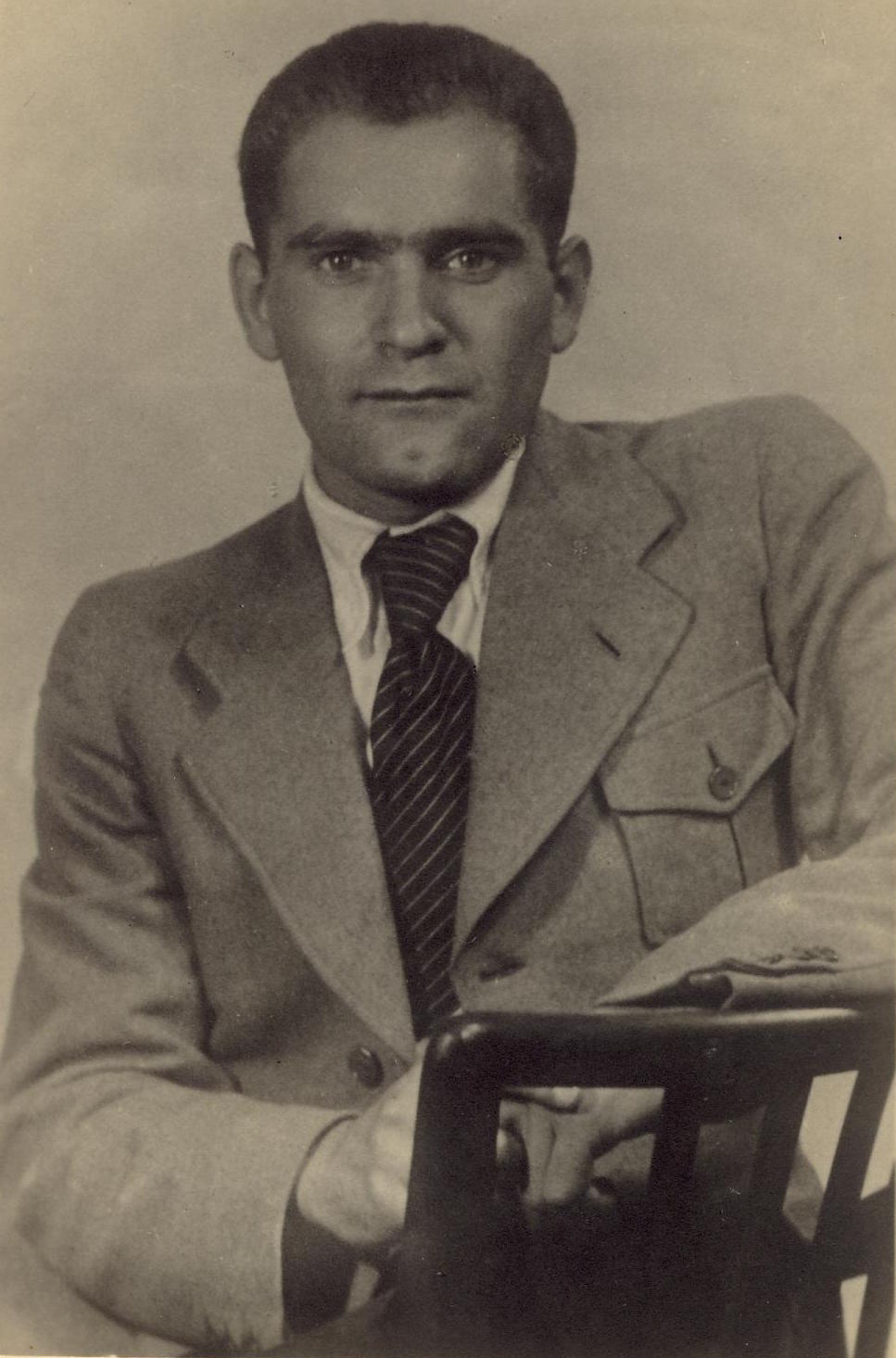
I was mustered into the Polish Army in March, 1939, and served in the 21st Infantry Regiment, in Warsaw. During that period my family was spread out all over the world. My father, three brothers and one sister were in America. My mother died in 1934. I lived in Gombin with my older brother, Joseph, who had a wife and a little girl of two.
I served in the Warsaw Regiment till the end of August when general mobilization was instituted and Poland was expecting a momentary attack on the part of the Nazi armies. We were sent on foot in the direction of Malva, near the Prussian border…

This book is the story of Jacob Stupay, the author’s uncle, who was a well-known ophthalmologist in Łodz, Poland. He trained at the prestigious Berlin University and lived an elite life-style before the Nazis prevented him from practicing medicine and confined him to the Łodz ghetto. After the tragic death of his wife, children and closest family members, he was hidden by a Gentile relative. The book documents the horrors of the last days in Warsaw and how these life experiences impact survivors like Jacob Stupay.

Hania survived many harrowing experiences during the WWII working as a non-Jewish woman in a business owned by Wilhelm Bachner. She came from one of Gombin’s wealthiest families, but lost 3 of her 5 siblings in the Holocaust. Published after her death, the article reveals the identity of her Polish Gentile “boyfriend”- Tadeusz (Tadek) Kazaniecki –who helped her and other Jews survive.


Immediately after the war, the provisional Polish government created the Central Commision for the Investigation of German Crimes in Poland, whose main task was to establish what had happened and prepare the evidence for the Nuremberg trial and for subsequent trials of German war criminals in Poland. The Commission collected documents and testimonies and began to publish them in 1946. The main report, published under the title German Crimes in Poland, gave the first general overview of the main concentration and extermination camps…

This well-known photo shows Jewish prisoners at the Bergen-Belsen Concentration Camp at the end of WW II. Circled in red at the right is the figure of Gombiner, Michael Ber, who was identified by Dahlia Libin (nee Ber), his granddaughter who lives in Calgary, Alberta, Canada. Michael Ber, z”l, was the son of Abraham and Miriam Ber.

This photo was provided by Gombiner, Israel Baruch, who is the young boy seated on the floor at the left. It shows a group of Jews who found refuge in Łodz, Poland in 1946 after World War II. Some survived Nazi concentration camps or places of hiding, and others returned from Russia. Avram Zychlinski, brother of Rajzel Zychlinsky, is seated near the right in the first row with his hands crossed. He escaped from Poland by joining the Russian army, leaving behind a wife and two daughters in Gombin; they were murdered during the Holocaust. He returned to Łodz after the war to establish a new life, co-founding the Łodz Film Institute, where many directors, including Roman Polanski, studied. Rajzel Zychlinsky, the famous Yiddish poet, may also be in the photo.
Find information on Gas Vans used in the murdering of Jews during the Holocaust.
United States Holocaust Memorial Museum
Rabbi Shimon Huberband, Jewish Religious and Cultural Life in Poland During the Holocaust (Yeshiva University Press, 1987), pp. 305-307.


